Product
Shuffly
The backend behind a real-time voice platform. Two markets run on it, and a separate team builds the apps.
Scroll for the rest of the page
The system
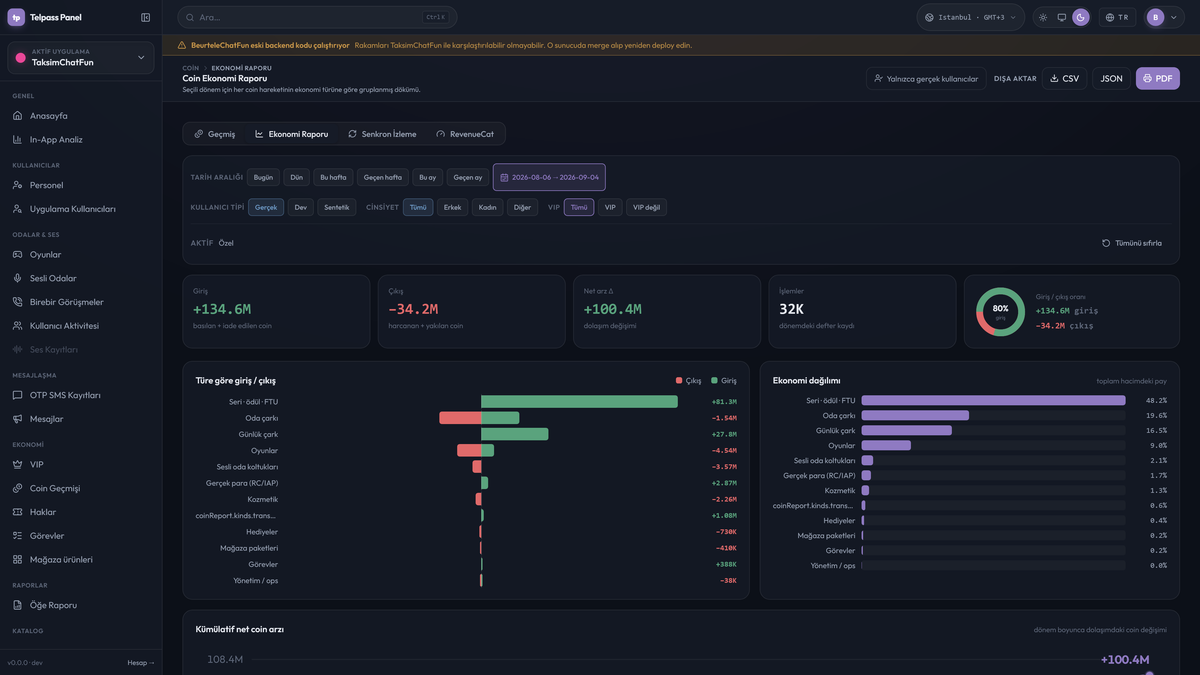
Real-time voice rooms in two markets, with a third coming. A separate team of four engineers builds the mobile apps. Everything behind the API they call is mine: the HTTP application, the WebSocket daemons holding room state, moderation and bans, purchases, push, and the deploy pipeline. The operator panel the operations team runs it from is mine as well.
Each market is a config file, not a fork. Localisation goes all the way to the client. Opening a market is a deploy.
System
Clients
Per-market mobile clients
Flutter · Dart
Built by the client team
Operator panel
Next.js · TypeScript
Contract
REST and WebSocket API
OpenAPI · WebSocket
The client team builds against this surface and cannot see behind it. It is the one part of the system that cannot break quietly.
Application
HTTP application
PHP · Slim
Room daemon
Workerman
Why
Holds tick-based room state: who is on which seat and for how long. REST does not share a process with it, they talk across Redis lists.
Direct-message daemon
Ratchet
Why
Ratchet, handling one-to-one messages. Kept apart from the room daemon, which is tick-based and holds seat state.
Services
Voice rooms
LiveKit
Why
Swapped from the previous provider on a system already serving users. Clients hold the session, the token and the room state, so the apps had to ship in the same release.
Moderation and bans
Why
Mine end to end. The reporting pipeline, the automated checks and the ban system, none of it bought.
Wallet and purchases
RevenueCat
Why
Third-party. A salaried team can buy back receipt validation and the store edge cases; on my own game I write the same job myself, because there the per-user bill is mine.
Push notifications
Firebase Cloud Messaging
State
Relational store
MySQL
Cache and message bus
Redis
6/**7 * Pure breadth-first search over the friend graph. No database access: the8 * caller injects a neighbor provider, so this class can be unit-tested with an9 * in-memory graph. Produces distance-2..maxDepth candidates ranked by BFS10 * distance (closer first), then by bridge count (more mutual paths first).11 *12 * Performance guards are class constants; the constructor accepts overrides so13 * tests can trip the caps cheaply without changing production behaviour.14 */15class FriendGraphTraversal16{17 public const HARD_MAX_DEPTH = 4;18 public const MAX_VISITED_NODES = 5000;19 public const MAX_FRONTIER = 2000;2021 public function __construct(22 private int $maxVisited = self::MAX_VISITED_NODES,23 private int $maxFrontier = self::MAX_FRONTIER,24 ) {25 }2627 public function clampDepth(int $requested): int28 {29 if ($requested < 2) {30 return 2;31 }32 return min($requested, self::HARD_MAX_DEPTH);33 }3435 /**36 * @param list<string> $level1Keys37 * @param callable(list<string>): array<string, list<string>> $neighborProvider38 * @param array<string, true> $excludedKeys39 *40 * @return array{41 * candidates: list<array{userKey: string, distance: int, bridgeCount: int, bridgeKeys: list<string>}>,42 * truncated: bool43 * }44 */45 public function run(46 string $seedKey,47 array $level1Keys,48 callable $neighborProvider,49 array $excludedKeys,50 int $maxDepth,51 ): array {52 $maxDepth = $this->clampDepth($maxDepth);5354 // distance[key] = shortest hop count from seed. seed=0, direct friends=1.55 $distance = [$seedKey => 0];56 foreach ($level1Keys as $k) {57 $distance[$k] = 1;58 }5960 /** @var array<string, array<string, true>> $bridges candidateKey => set of level-1 bridge keys */61 $bridges = [];62 $truncated = false;63 $visited = count($distance);6465 $frontier = array_values(array_unique($level1Keys));66 $d = 1;6768 while ($d < $maxDepth && $frontier !== [] && $visited < $this->maxVisited) {69 if (count($frontier) > $this->maxFrontier) {70 $frontier = array_slice($frontier, 0, $this->maxFrontier);71 $truncated = true;72 }7374 $neighbors = $neighborProvider($frontier);7576 /** @var array<string, array<string, true>> $nextLayer */77 $nextLayer = [];78 foreach ($frontier as $node) {79 // Bridges that reach $node on a shortest path. A level-1 node is80 // its own bridge; deeper nodes carry the accumulated set.81 $nodeBridges = $d === 1 ? [(string) $node => true] : ($bridges[$node] ?? []);82 foreach (($neighbors[$node] ?? []) as $nb) {83 if (isset($distance[$nb]) && $distance[$nb] <= $d) {84 continue; // reached earlier/at this layer — not via $node's next hop85 }86 if (!isset($nextLayer[$nb])) {87 $nextLayer[$nb] = [];88 }89 foreach ($nodeBridges as $b => $_) {90 $nextLayer[$nb][$b] = true; // union accumulates distinct paths91 }92 }93 }9495 $nextFrontier = [];96 foreach ($nextLayer as $nb => $brs) {97 if (isset($distance[$nb])) {98 continue; // committed in an earlier (shorter) layer99 }100 $distance[$nb] = $d + 1;101 $bridges[$nb] = $brs;102 $nextFrontier[] = (string) $nb;103 $visited++;104 if ($visited >= $this->maxVisited) {105 $truncated = true;106 break;107 }108 }109110 $frontier = $nextFrontier;111 $d++;112 }113114 $candidates = [];115 foreach ($bridges as $key => $brs) {116 if (isset($excludedKeys[$key])) {117 continue;118 }119 $bridgeKeys = array_map('strval', array_keys($brs));120 sort($bridgeKeys);121 $candidates[] = [122 'userKey' => (string) $key,123 'distance' => $distance[$key],124 'bridgeCount' => count($brs),125 'bridgeKeys' => $bridgeKeys,126 ];127 }128129 usort($candidates, static function (array $a, array $b): int {130 return [$a['distance'], -$a['bridgeCount'], $a['userKey']]131 <=> [$b['distance'], -$b['bridgeCount'], $b['userKey']];132 });133134 return ['candidates' => $candidates, 'truncated' => $truncated];135 }136}shuffly-serverb7006f04app/Services/Recommendation/FriendGraphTraversal.phpLines 6 to 136131 lines
/**
 * Pure breadth-first search over the friend graph. No database access: the
 * caller injects a neighbor provider, so this class can be unit-tested with an
 * in-memory graph. Produces distance-2..maxDepth candidates ranked by BFS
 * distance (closer first), then by bridge count (more mutual paths first).
 *
 * Performance guards are class constants; the constructor accepts overrides so
 * tests can trip the caps cheaply without changing production behaviour.
 */
class FriendGraphTraversal
{
    public const HARD_MAX_DEPTH = 4;
    public const MAX_VISITED_NODES = 5000;
    public const MAX_FRONTIER = 2000;

    public function __construct(
        private int $maxVisited = self::MAX_VISITED_NODES,
        private int $maxFrontier = self::MAX_FRONTIER,
    ) {
    }

    public function clampDepth(int $requested): int
    {
        if ($requested < 2) {
            return 2;
        }
        return min($requested, self::HARD_MAX_DEPTH);
    }

    /**
     * @param list<string>                                          $level1Keys
     * @param callable(list<string>): array<string, list<string>>  $neighborProvider
     * @param array<string, true>                                   $excludedKeys
     *
     * @return array{
     *   candidates: list<array{userKey: string, distance: int, bridgeCount: int, bridgeKeys: list<string>}>,
     *   truncated: bool
     * }
     */
    public function run(
        string $seedKey,
        array $level1Keys,
        callable $neighborProvider,
        array $excludedKeys,
        int $maxDepth,
    ): array {
        $maxDepth = $this->clampDepth($maxDepth);

        // distance[key] = shortest hop count from seed. seed=0, direct friends=1.
        $distance = [$seedKey => 0];
        foreach ($level1Keys as $k) {
            $distance[$k] = 1;
        }

        /** @var array<string, array<string, true>> $bridges candidateKey => set of level-1 bridge keys */
        $bridges = [];
        $truncated = false;
        $visited = count($distance);

        $frontier = array_values(array_unique($level1Keys));
        $d = 1;

        while ($d < $maxDepth && $frontier !== [] && $visited < $this->maxVisited) {
            if (count($frontier) > $this->maxFrontier) {
                $frontier = array_slice($frontier, 0, $this->maxFrontier);
                $truncated = true;
            }

            $neighbors = $neighborProvider($frontier);

            /** @var array<string, array<string, true>> $nextLayer */
            $nextLayer = [];
            foreach ($frontier as $node) {
                // Bridges that reach $node on a shortest path. A level-1 node is
                // its own bridge; deeper nodes carry the accumulated set.
                $nodeBridges = $d === 1 ? [(string) $node => true] : ($bridges[$node] ?? []);
                foreach (($neighbors[$node] ?? []) as $nb) {
                    if (isset($distance[$nb]) && $distance[$nb] <= $d) {
                        continue; // reached earlier/at this layer — not via $node's next hop
                    }
                    if (!isset($nextLayer[$nb])) {
                        $nextLayer[$nb] = [];
                    }
                    foreach ($nodeBridges as $b => $_) {
                        $nextLayer[$nb][$b] = true; // union accumulates distinct paths
                    }
                }
            }

            $nextFrontier = [];
            foreach ($nextLayer as $nb => $brs) {
                if (isset($distance[$nb])) {
                    continue; // committed in an earlier (shorter) layer
                }
                $distance[$nb] = $d + 1;
                $bridges[$nb] = $brs;
                $nextFrontier[] = (string) $nb;
                $visited++;
                if ($visited >= $this->maxVisited) {
                    $truncated = true;
                    break;
                }
            }

            $frontier = $nextFrontier;
            $d++;
        }

        $candidates = [];
        foreach ($bridges as $key => $brs) {
            if (isset($excludedKeys[$key])) {
                continue;
            }
            $bridgeKeys = array_map('strval', array_keys($brs));
            sort($bridgeKeys);
            $candidates[] = [
                'userKey' => (string) $key,
                'distance' => $distance[$key],
                'bridgeCount' => count($brs),
                'bridgeKeys' => $bridgeKeys,
            ];
        }

        usort($candidates, static function (array $a, array $b): int {
            return [$a['distance'], -$a['bridgeCount'], $a['userKey']]
                <=> [$b['distance'], -$b['bridgeCount'], $b['userKey']];
        });

        return ['candidates' => $candidates, 'truncated' => $truncated];
    }
}- Analytical queries read the store directly rather than through the API, so reporting load never reaches the application server.
Replacing the voice engine while it ran
The biggest job was swapping the real-time voice provider on a system already serving users.
The swap could not stop at the backend. Clients hold the session, the token and the room state, so the apps had to ship in the same release. I spent that migration committing to the client team’s repo, on their branch, instead of sending a changelog and waiting.
Contribution
- Commits authored
- 2,074
- In another team's codebase
- 175
- Decisions recorded
- 102
22 of 23 weeks active · 6 Apr 2026 – 13 Sep 2026
Longest run · 15 weeks · Jun – Sep
I maintain the service four client engineers build against. When the voice provider changed I worked in their repository alongside them, on their branch.
Measured 2026-09-08
We settled what the platform stores at the same time:
- One-to-one messages: persisted. A delivery guarantee is worth the storage it costs.
- Voice-room chat: not persisted. Message bodies are never written anywhere, which keeps the biggest table in the system from existing.
The API is the product
Four engineers build on it and cannot read the code behind it, so it gets treated like a product.
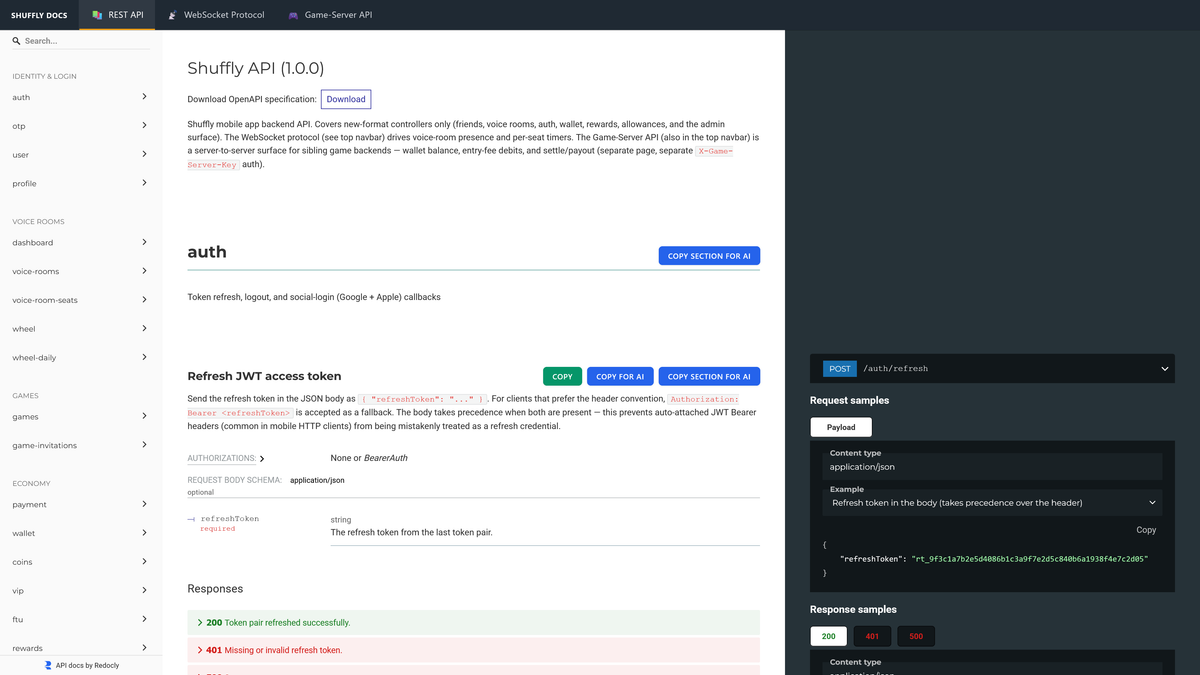
- Versioned and published, split by path, schema and channel. A pipeline publishes on merge, so their docs are never older than my code.
- Every endpoint states its side effects: whether calling it twice is safe, what to do with each response, which errors are worth a retry.
- Integration guides written for those engineers, covering whole flows rather than single endpoints.
Scroll for the rest of the page
The stack I inherited
PHP 8, Slim 4, MySQL, Redis, with the WebSocket daemons beside the HTTP application instead of inside it.
I made the case for replacing it early, while it was still cheap. That call went the other way, so the job became making it safe for other people to work in.
53
Subsystem docs
How each part behaves.
102
Decision records
Why it behaves that way.
4
Test suites
Against real MySQL and Redis.
Mocks hide the bugs that matter here, so the suites run against the real thing.
Past the code
- Deploy and rollback. Four branches. Only a commit whose tests passed can reach production, and a tag enforces it.
- The deploy verifies itself. After a reload it probes the WebSocket proxy for a real answer. This host’s own health report is not reliable.
- Also mine: moderation and bans, push delivery, staging, CI.